How your child’s drawing develops: A quick guide for parents
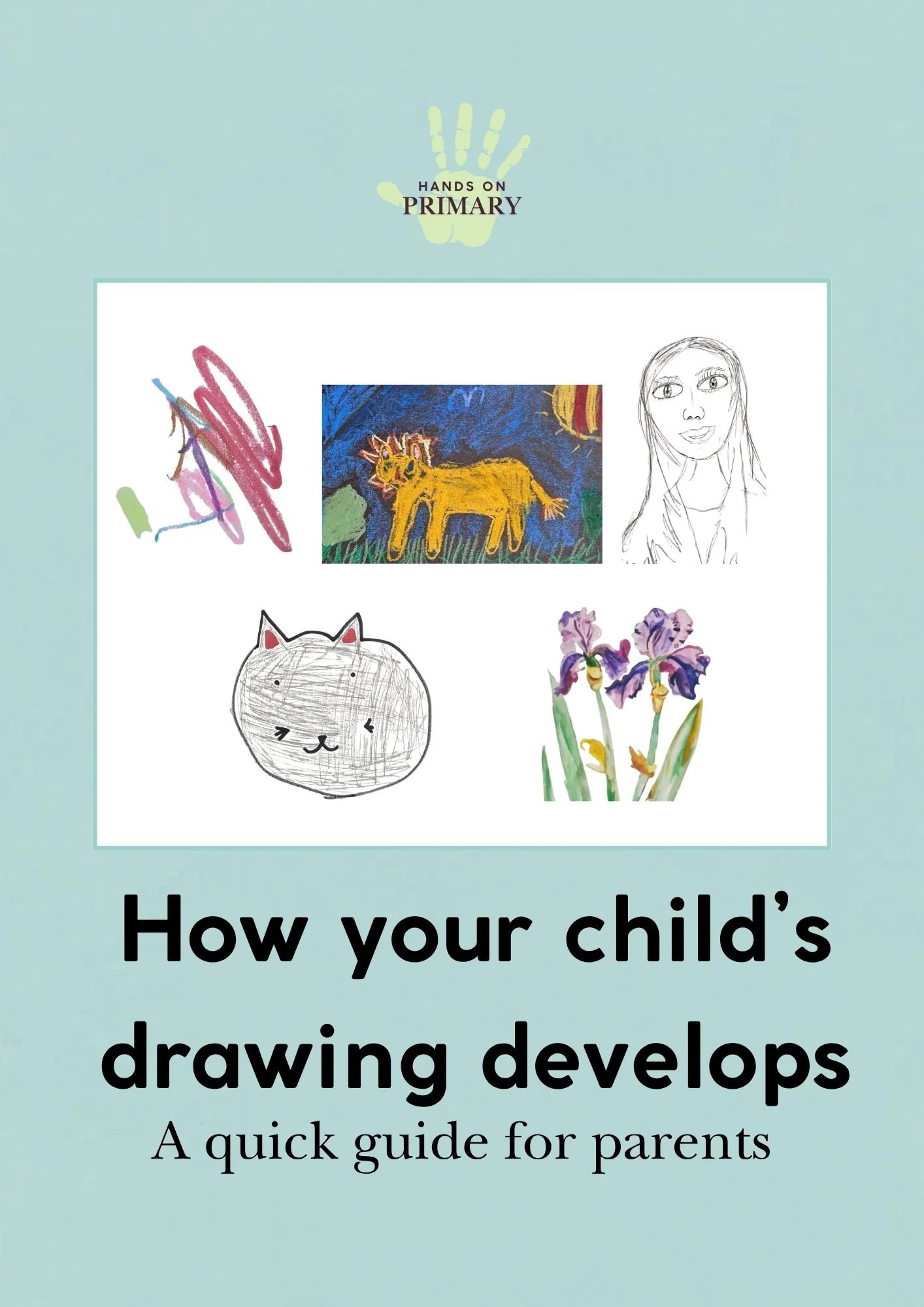
Drawing development title page from Hands on Primary Resource.
Overview of the developmental stages of drawing
This post details typical stages in children’s mark making and drawing development. It is based on a model by the researcher and arts educator Viktor Lowenfeld, which was later expanded on by W. Lambert Brittain. It outlines artistic skills you may see in your child’s drawings at different ages. It is normal for children to move through the stages at different rates and they may show characteristics of several stages simultaneously.
The 6 stages are:
The Scribbling Stage: 18 months - 4 years
The Pre-schematic Stage: 4 years - 7 years
The Schematic Stage: 7 years - 9 years
Dawning Realism / Transitional Phase: 9 years - 11 years
Realism Stage: 11 years - 14 years
Decision Stage: 14 years +
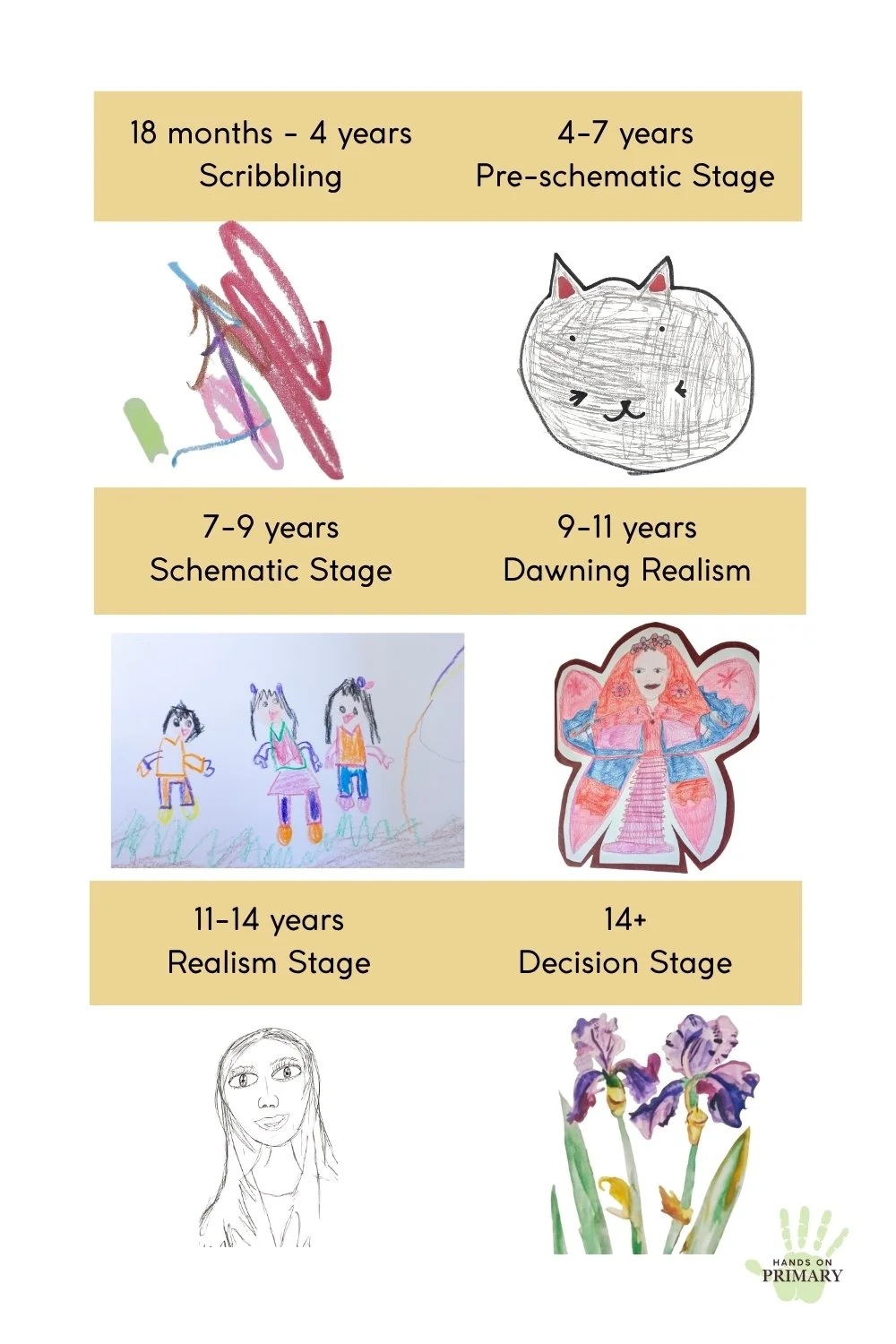
Children’s drawings showing different stages of drawing development | Hands on Primary
The Scribbling Stage
18 months - 4 years
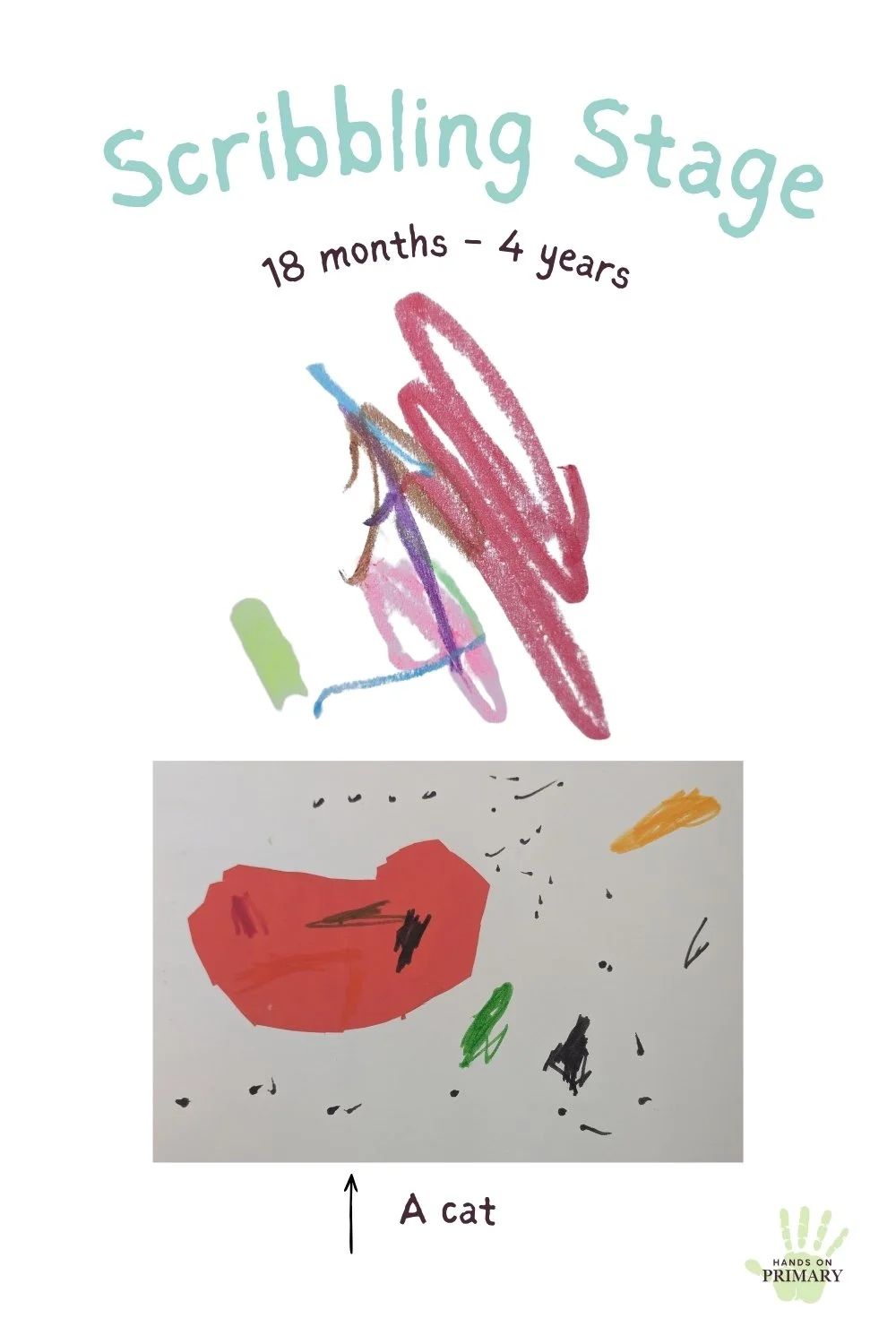
Real-life children’s drawings, showing progression from scribbles to mark-making with meaning attached. | Hands on Primary
Young children begin exploring what happens when they move a crayon, pencil or paintbrush across paper. At first, marks are random and experimental, but gradually children gain control over their movements and begin to create repeated shapes such as circles and lines. Towards the end of this stage, children often give meaning to their marks and may proudly tell you, "This is Mummy!" even when the picture still looks like a scribble.
You might notice:
Random marks, dots, circles and lines.
Large arm movements gradually becoming more controlled.
Children naming or telling stories about their drawings.
Great enjoyment of the process rather than the finished picture.
How adults can help:
Offer plenty of opportunities for mark-making using chunky crayons, paint, chalk and different surfaces. Celebrate effort and exploration rather than asking, "What is it?"
The Pre-schematic Stage
4 years - 7 years
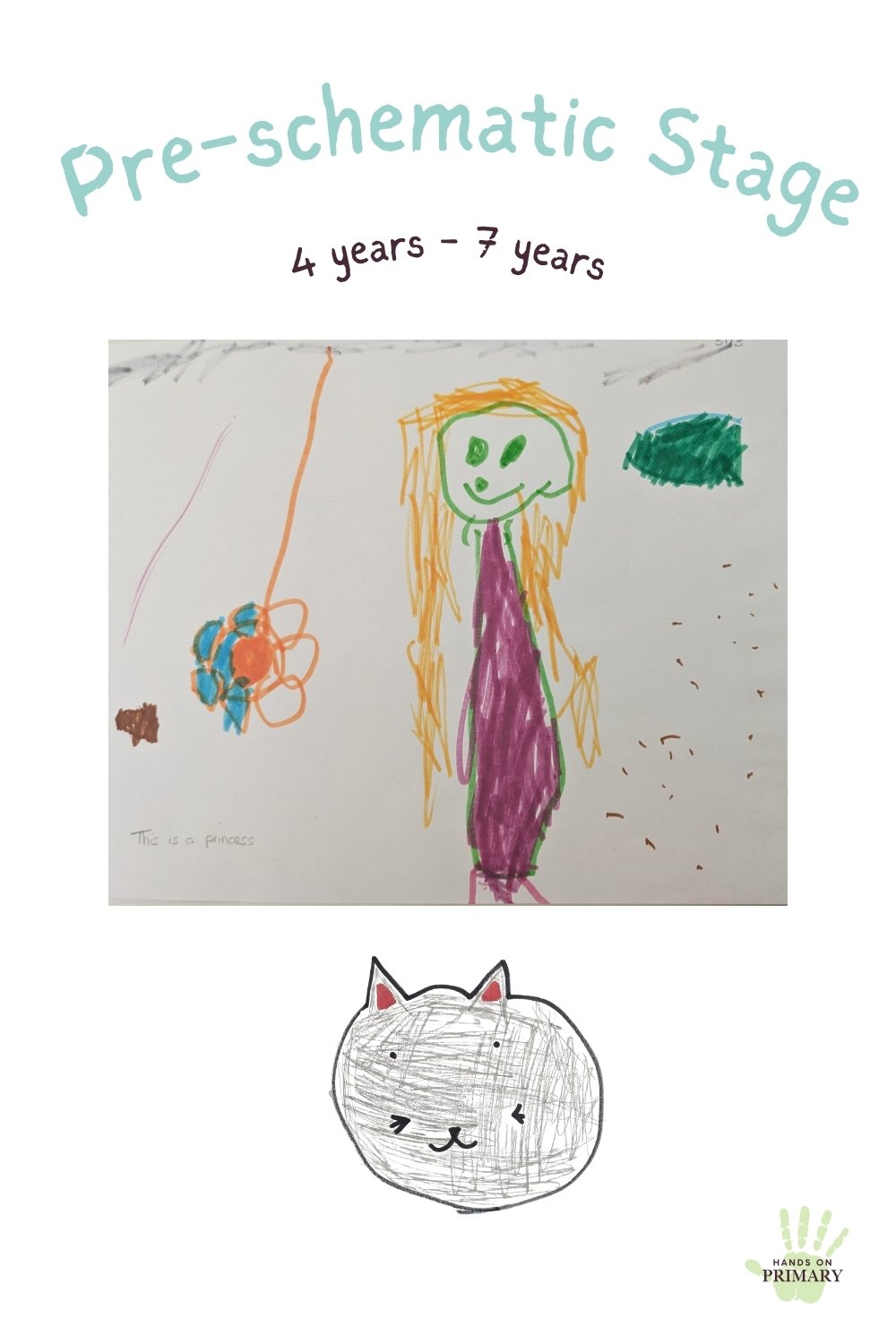
Real children’s drawings, with a ‘tadpole person’ and a floating cat. | Hands on Primary
In the Pre-schematic stage children begin to use simple symbols to represent the world around them. People often appear as "tadpole figures" with a large head and legs, and objects may seem to float across the page without a clear ground line.
You might notice:
Recognisable people, animals and objects.
"Tadpole" people with heads and limbs.
Bright, imaginative use of colour.
Drawings becoming a way to tell stories and share experiences.
How adults can help:
Encourage children to talk about their artwork and experiences. Avoid correcting drawings or insisting that things should look "right".
The Schematic Stage
7 years - 9 years
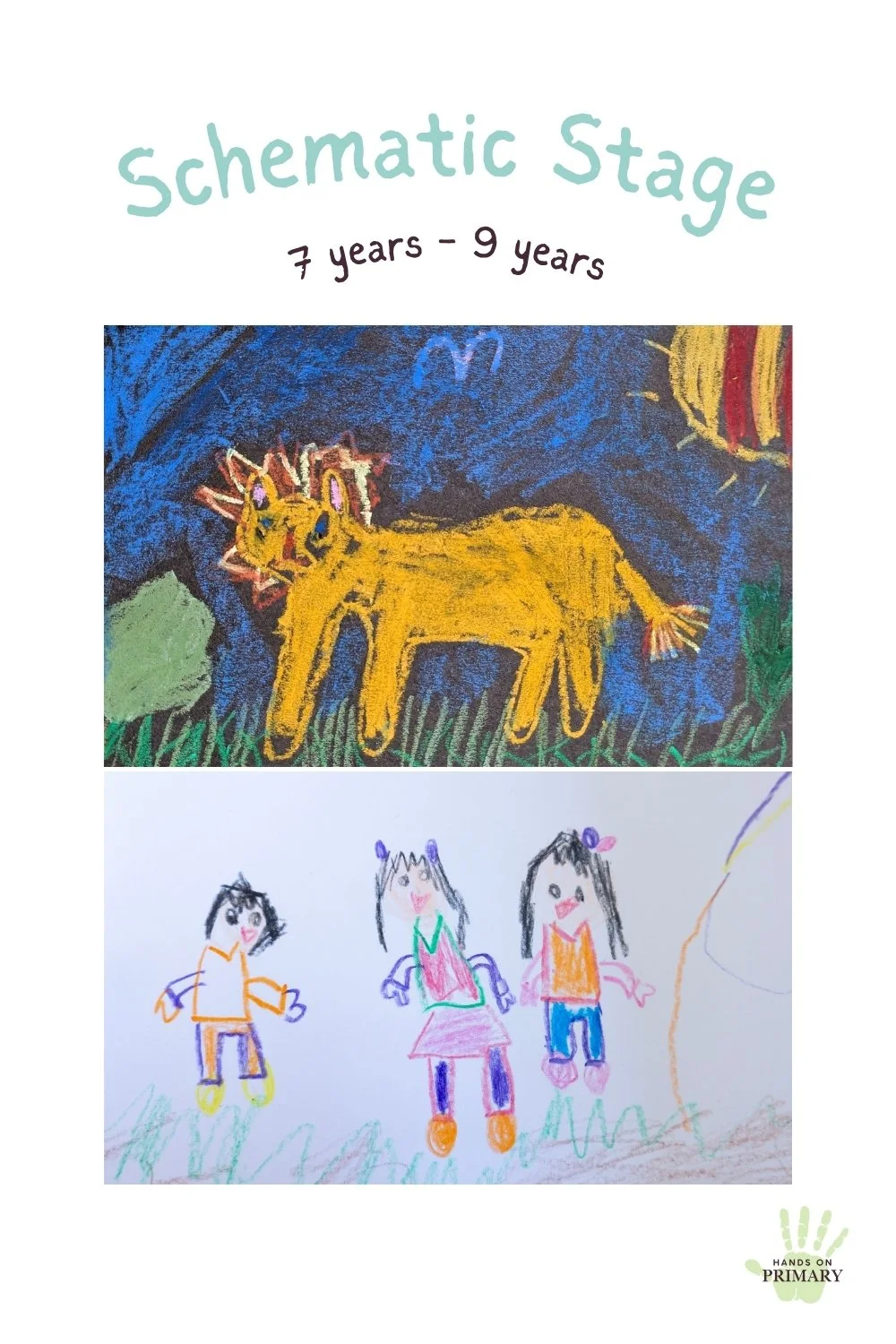
A ground line and skyline developing. | Hands on Primary
Children develop personal drawing formulas or "schemas". A child may draw houses, trees or people in the same way repeatedly because these symbols represent their understanding of the world.
You might notice:
A ground line and sky line appearing.
Repeated ways of drawing familiar objects.
Greater organisation and detail.
Increased interest in relationships between objects.
How adults can help: Provide varied experiences, photographs, real objects and opportunities for observation while continuing to value creativity and imagination.
Dawning Realism / Transitional Stage
9 years - 11 years
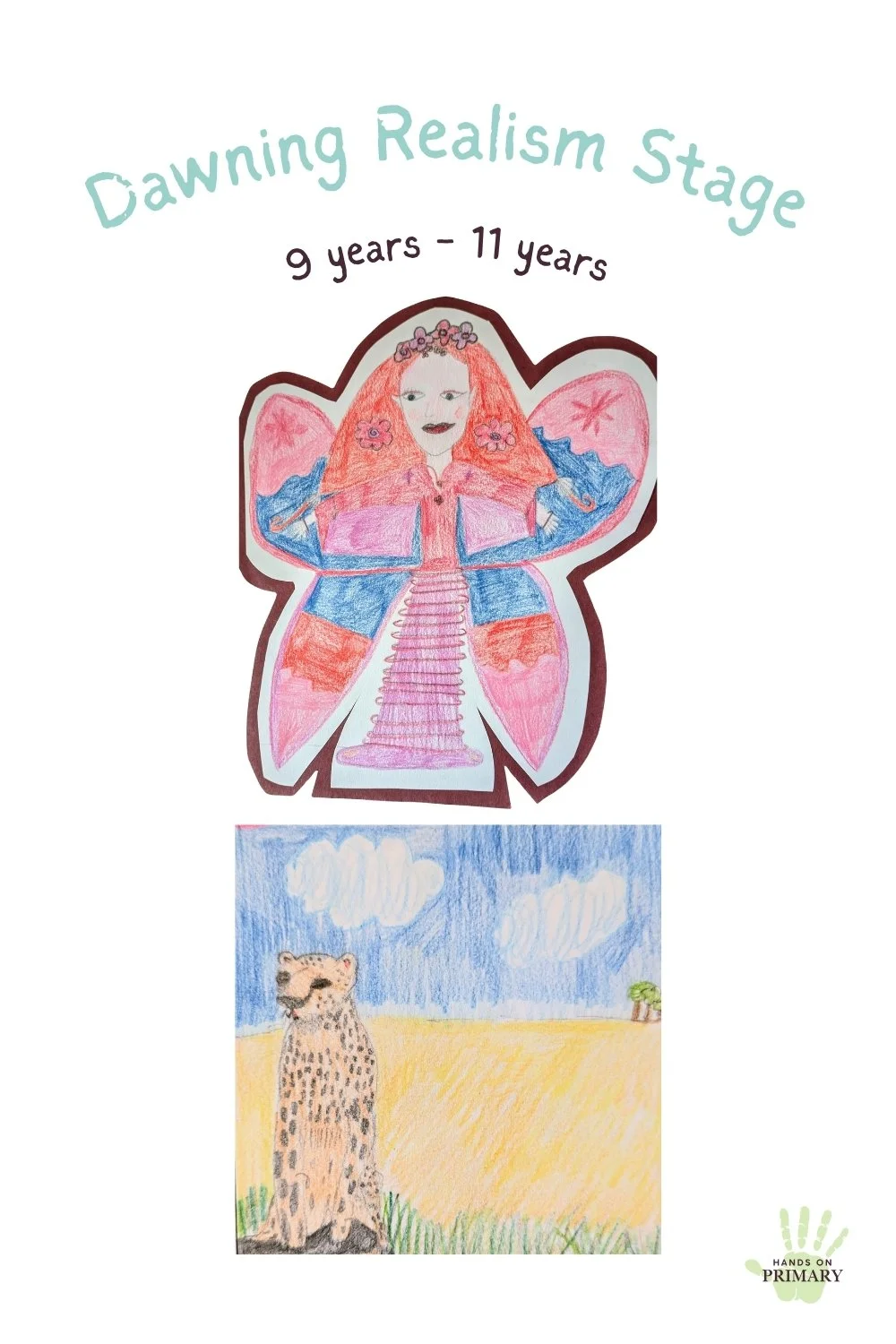
Increasing detail, overlapping and perspective. | Hands on Primary
Children become increasingly aware that their drawings do not always look like real life. They begin adding more details and showing depth, overlap and movement.
You might notice:
More realistic proportions.
Greater attention to detail.
Comparisons between their work and others'.
Frustration when drawings do not match their expectations.
How adults can help: Encourage persistence and experimentation. Focus on progress rather than perfection and introduce simple observational drawing activities.
Realism Stage or Pseudo-naturalistic Stage
11 years - 14 years
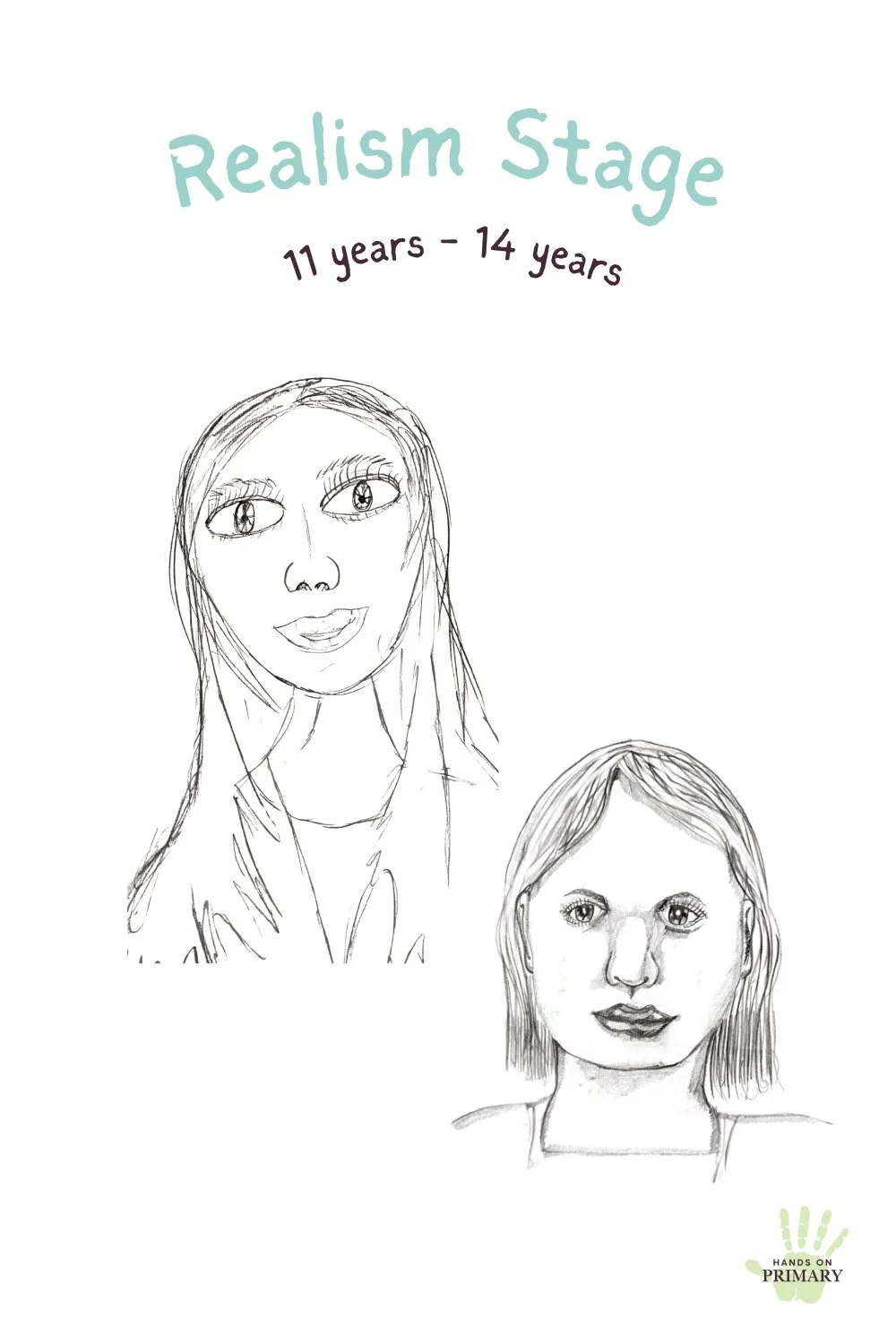
Increased interest in facial proportions, realism and shading. | Hands on Primary
Young people strive for realism and often become highly self-critical. Some children lose confidence if they believe they are "not good at art".
You might notice:
Interest in realism, perspective and shading.
Strong self-criticism.
Personal style beginning to emerge.
Greater attention to mood, emotion and expression.
How adults can help: Provide encouragement, teach specific artistic techniques and remind children that artistic skill develops through practice.
Decision Stage
14 years +
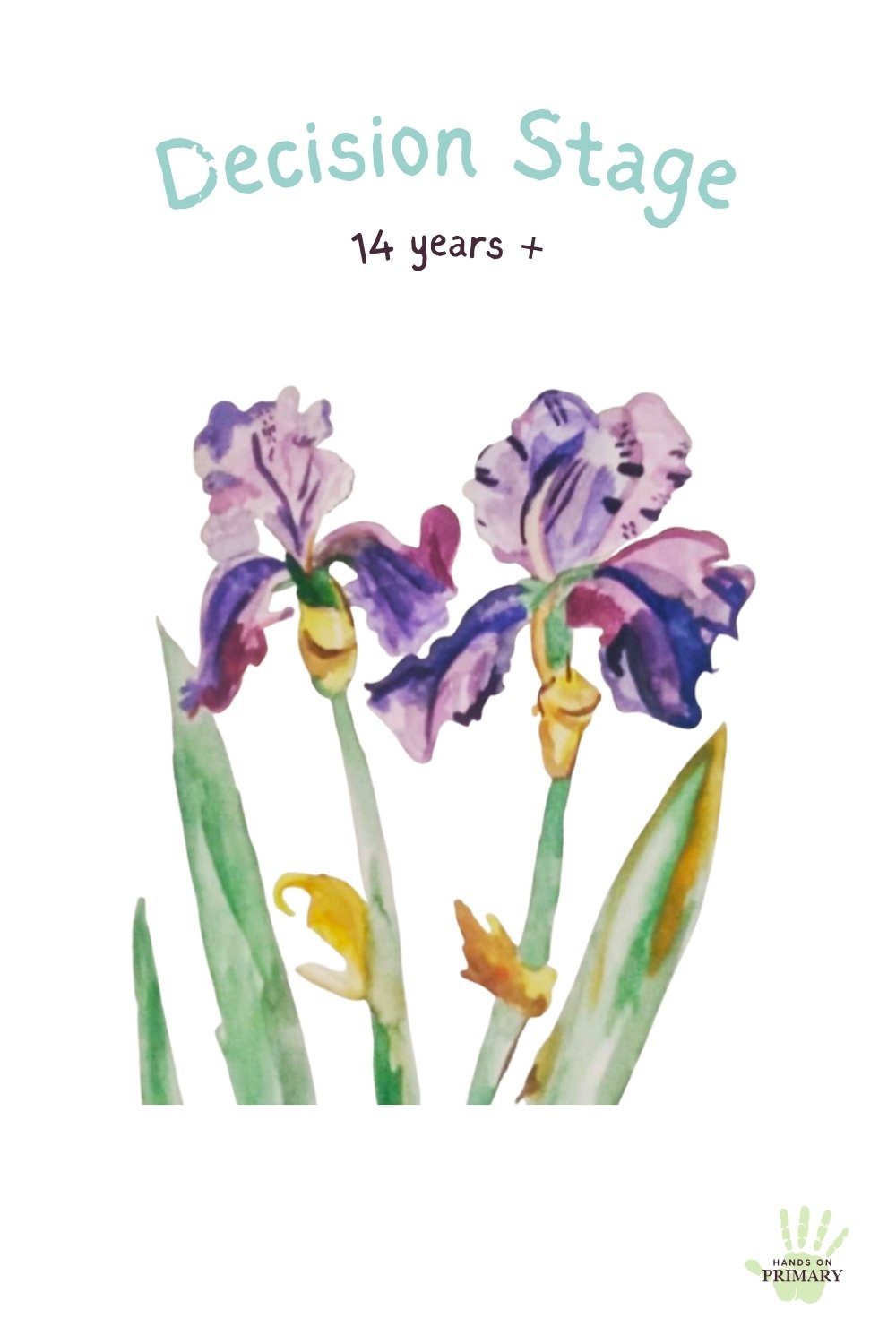
Preferences forming in subject, media and child’s artistic identity. | Hands on Primary
Adolescents begin making decisions about their artistic identity. Some continue to develop their skills enthusiastically, while others choose different interests.
You might notice:
Personal artistic styles emerging.
Increased specialisation in preferred media or subjects.
More sophisticated ideas and self-expression.
Some young people choosing to stop drawing altogether.
How adults can help: Respect individual choices while continuing to provide opportunities for creative expression without pressure.
Remember each stage is overlapping and general. It is normal to show characteristics from across stages as children’s drawings develop.
We would love to hear your thoughts and see some of your child’s drawings.
Email us at hello@handsonprimary.com
Lowenfeld, V., & Brittain, W. L. Creative and Mental Growth (various editions).
Gil-Ruiz, P. et al. (2025). Children's Drawing and Graphic Development: An Empirical Study of the Developmental Stages According to Lowenfeld. Education Sciences.
Luquet, G. H. (1927). Children's Drawings (classic developmental work referenced extensively in contemporary research).