The Best Books About Butterflies and Insects for Children: Picture Books, Stories & Non-Fiction
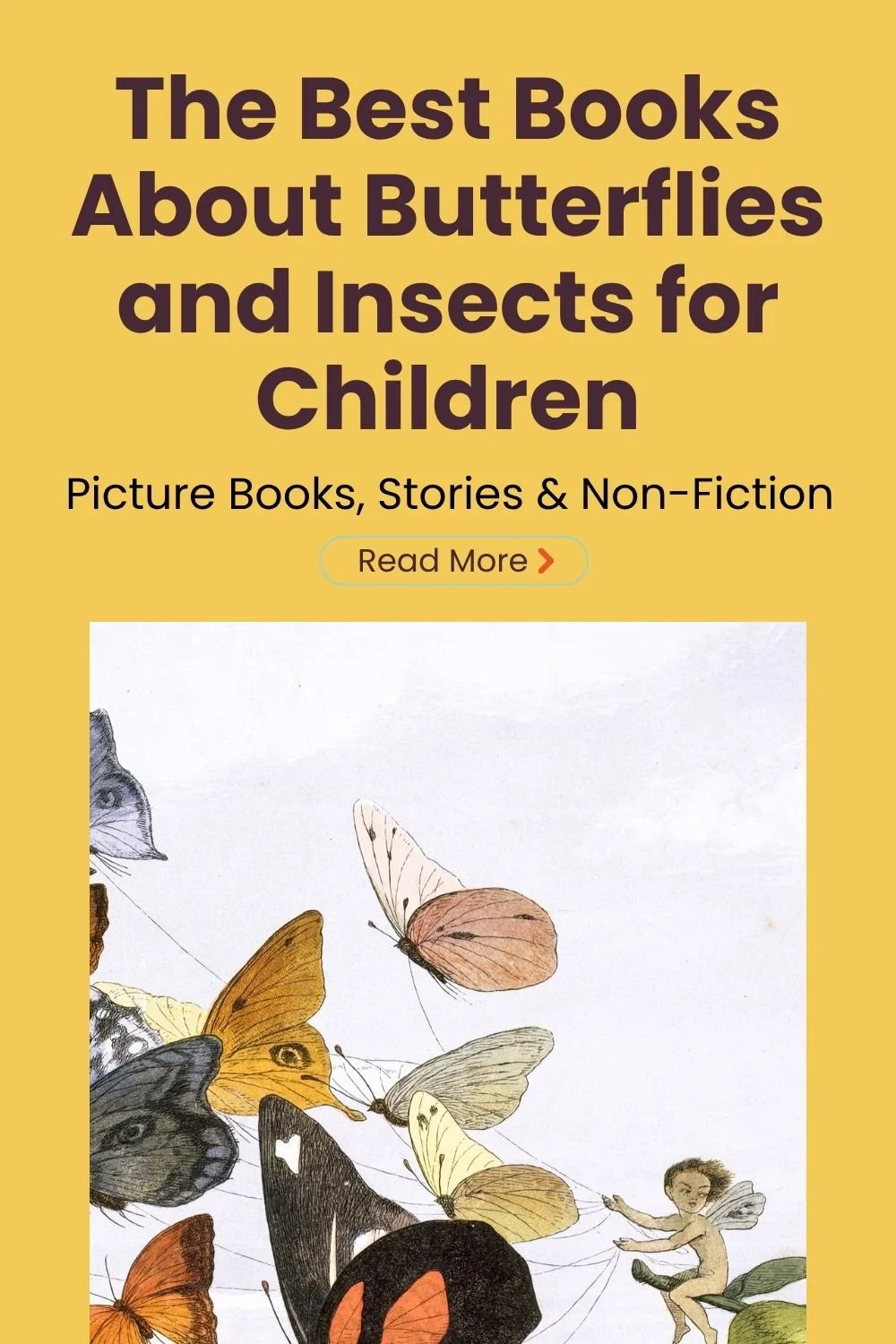
Butterflies are one of those wonderful topics that seem to capture children’s attention almost immediately. There is something genuinely extraordinary about watching a caterpillar disappear into a chrysalis and emerge as something completely different.
But butterflies are also a brilliant starting point for exploring the much bigger world of insects and minibeasts.
Whether you are learning about life cycles, heading outside on a bug hunt, raising caterpillars at home or simply have a child who loves creepy-crawlies, books can help children look more closely at the tiny creatures living around them.
I am a big believer in having books available that complement what children are learning about. Stories help children connect emotionally with a topic, while beautiful non-fiction gives them the knowledge and vocabulary to understand what they find.
So, rather than an enormous list, I have gathered together some lovely books worth looking out for at your library, bookshop or second-hand.
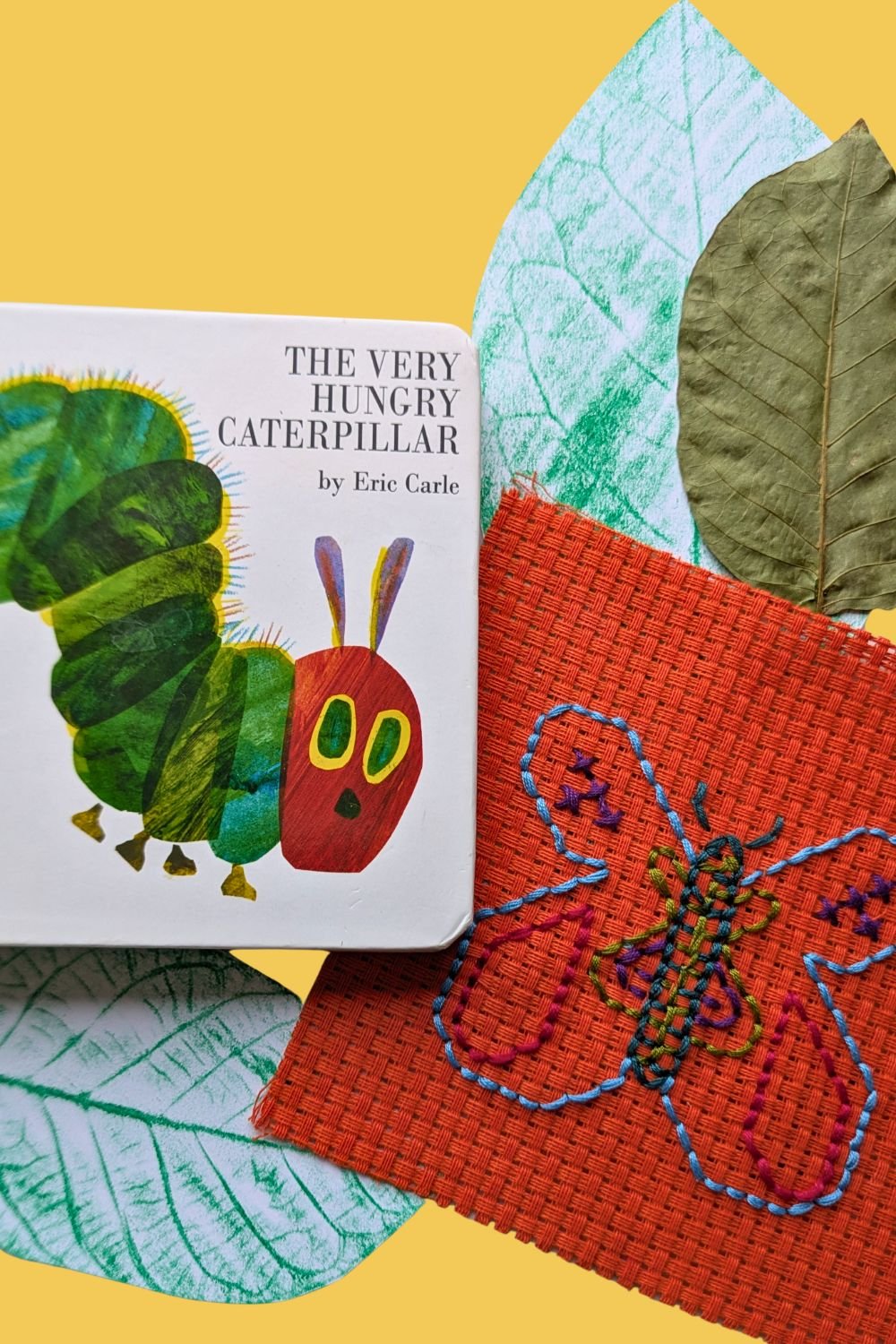
The Very Hungry Caterpillar by Eric Carle with crafts from Hands On Primary Learning Packs
Picture Books About Metamorphosis and Insect Life Cycles
These books are fantastic for blending storytelling and beautiful illustrations with science learning about insect life cycles, metamorphosis and minibeast habitats.
The Very Hungry Caterpillar by Eric Carle
It would be almost impossible to make a list of children's books about butterflies without beginning here.
The Very Hungry Caterpillar follows a tiny caterpillar from egg, through a rather eventful period of eating and growing, to his eventual transformation into a butterfly.
There is a reason this book has remained such a favourite. Eric Carle’s distinctive collage illustrations are beautiful while the simple structure introduces young children to ideas about growth, change and sequencing.
For very young children, there are also plenty of other things to notice: counting, fruit, colours and the days of the week.
Lovely for: approximately ages 2–6, introducing life cycles, sequencing and making your own painted-paper collages.
Tadpole's Promise by Jeanne Willis, illustrated by Tony Ross
This one isn't strictly an insect book — but it absolutely earns its place in a collection about metamorphosis.
A tadpole and a caterpillar fall in love and promise one another that they will never change. Unfortunately, nature has other plans.
As the tadpole slowly becomes a frog and the caterpillar transforms into a butterfly, the story provides a wonderful way to compare two very different life cycles. It is funny, clever and has a rather memorable ending!
This is particularly good with slightly older children who can appreciate the humour and talk about what it actually means for living things to grow and change.
Lovely for: approximately ages 4–8, comparing life cycles, discussing change and making predictions.
My Butterfly Bouquet by Nicola Davies, illustrated by Hannah Peck
This is a particularly lovely bridge between story and science.
The story follows a little girl who becomes fascinated by butterflies and, with her family, begins creating a garden where they can thrive. Alongside the story, children learn about butterflies, their life cycle and the plants they need.
I particularly like books like this because they take learning beyond simply knowing about an animal. Children begin to understand that the choices we make in our own gardens and outdoor spaces can help wildlife too.
Lovely for: approximately ages 4–8, butterfly-friendly gardening, nature study and learning about habitats.
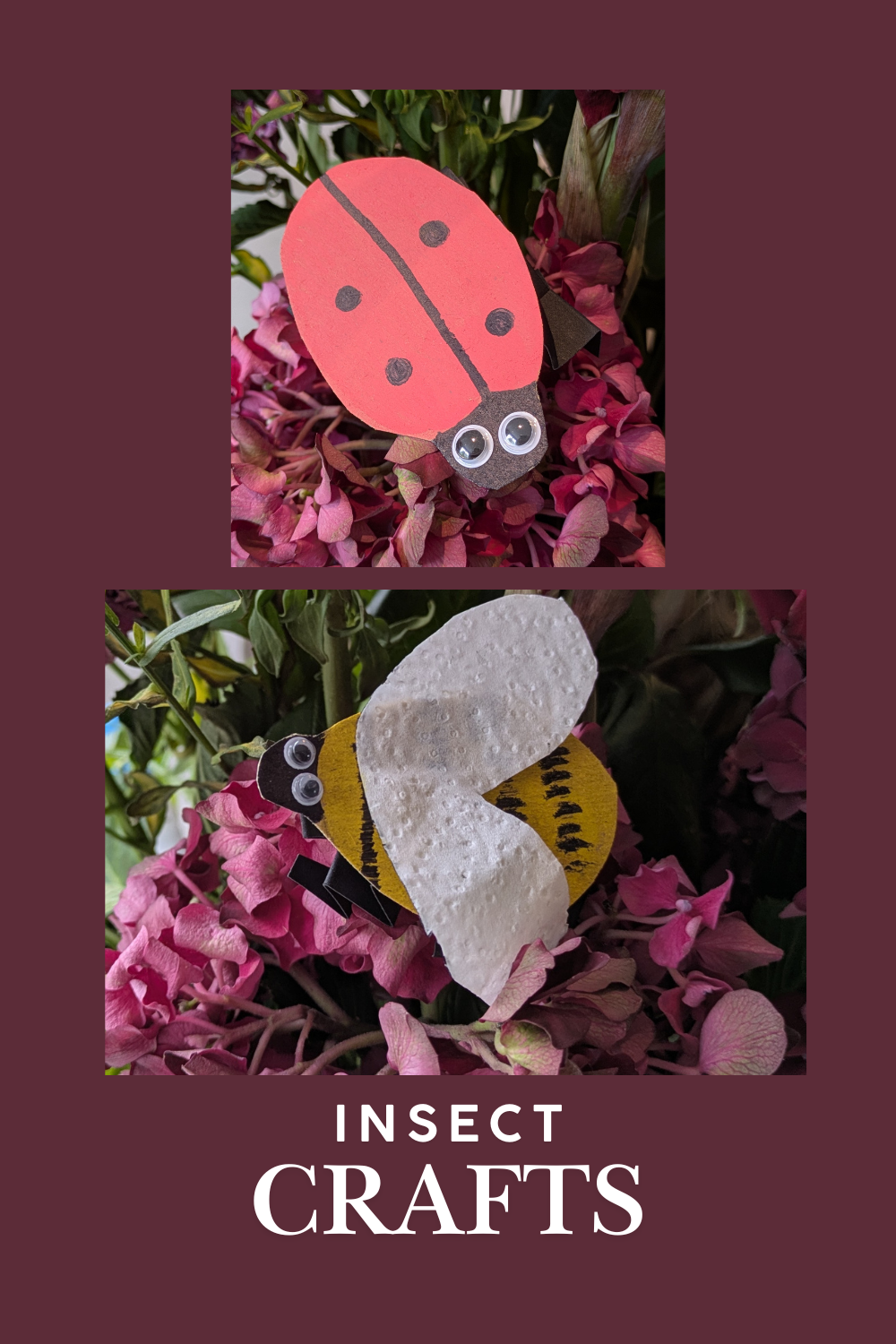
Simple bee and ladybird crafts from Hands On Primary
Stories With Insects as Characters
Not every book in an insect study needs to explicitly teach the science.
Stories can make children curious about creatures they might otherwise overlook - or even be frightened of. Once you have read stories about beetles, bees, caterpillars and spiders, suddenly finding one outside can feel much more interesting.
Frank Is a Butterfly by Alex Latimer
Frank is a rather ordinary-looking brown caterpillar who is perfectly content with his life. When the caterpillars transform, the other butterflies become preoccupied with how their new wings look. Frank, meanwhile, is much more excited about what his wings allow him to do.
It's a funny story, but there is a lovely message underneath it about appearance, gratitude and exploring the world around you.
It also opens up an interesting art conversation. Butterflies don't have to be covered in rainbow colours to be interesting or beautiful. Looking at photographs of real species afterwards would be a wonderful extension.
Lovely for: approximately ages 4–7, talking about appearance and individuality, and looking closely at real butterfly patterns.
The Very Busy Spider by Eric Carle
Another Eric Carle classic, this time following a spider as she concentrates on building her web while the animals around her repeatedly try to distract her.
Technically, of course, spiders are arachnids rather than insects - which is itself a great little piece of scientific knowledge to introduce.
The tactile web and repetitive language make this particularly accessible to younger children.
Lovely for: approximately ages 2–6, minibeast themes, web-making activities and introducing the difference between insects and arachnids.
Superworm by Julia Donaldson, illustrated by Axel Scheffler
Another honorary addition to our insect list: worms aren't insects either!
But Superworm is a wonderfully fun way of bringing the tiny creatures beneath our feet into children's stories. It is full of familiar minibeasts and works especially well before heading outdoors to see what children can find themselves.
Lovely for: approximately ages 3–7, minibeast hunts, outdoor learning and children who enjoy rhyme.
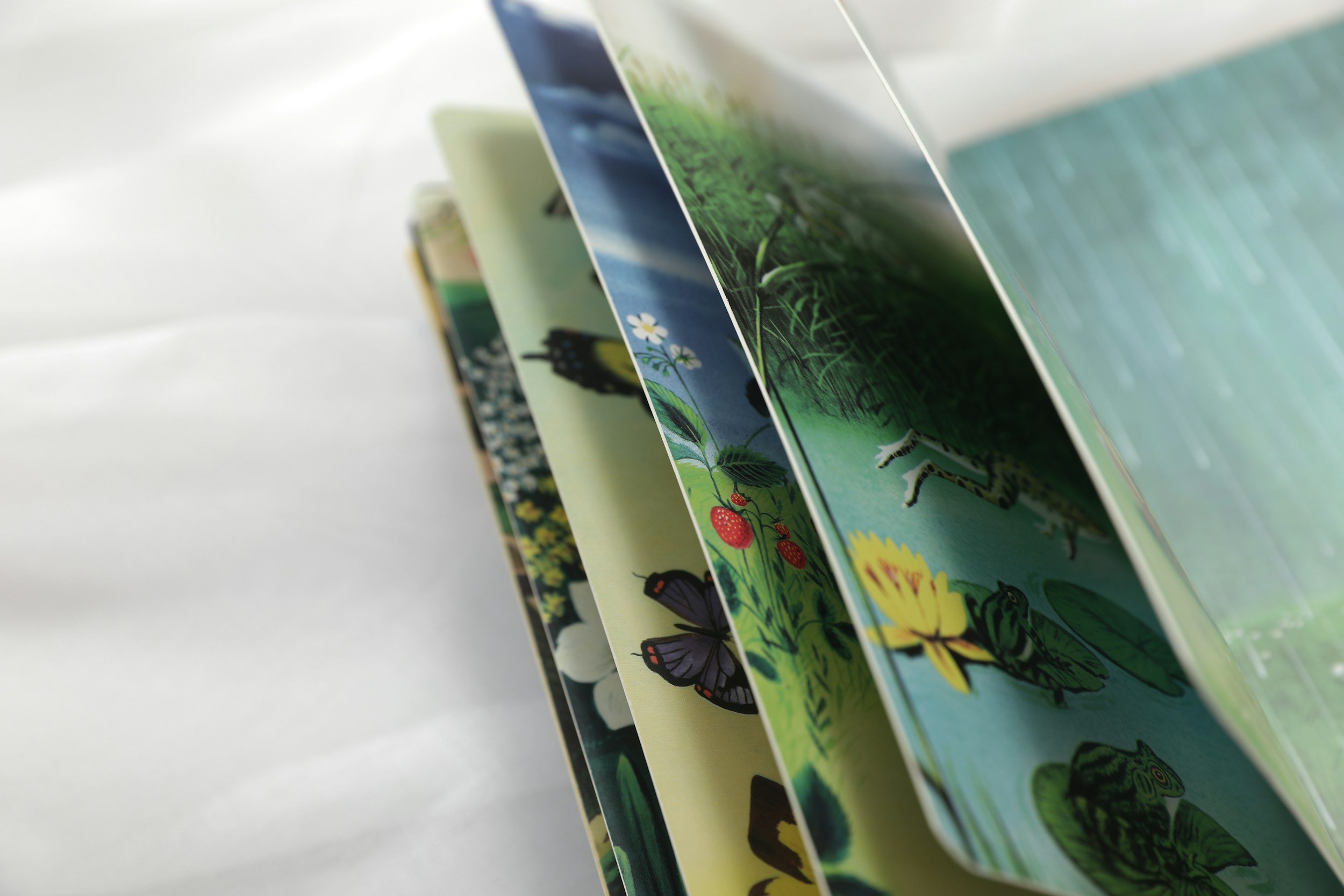
Beautifully Illustrated Non-Fiction Books About Insects
As children become interested in insects, I love having proper non-fiction books within reach.
They don't necessarily need to be read from beginning to end. A beautiful reference book can sit on a table and be returned to again and again: to identify something found outside, answer a question or simply spend ten minutes looking closely at extraordinary photographs and illustrations.
Insect by DK
This is the kind of non-fiction book that works particularly well for children who love to browse.
It introduces an enormous variety of insects, from butterflies and beetles to ants and other remarkable creatures, through large illustrations and bite-sized information.
Books like this are useful across quite a wide age range because younger children can explore the pictures alongside an adult while older children can begin reading sections independently.
Lovely for: approximately ages 6+, independent browsing, insect research, drawing and identifying similarities and differences.
What's Inside a Caterpillar Cocoon? by Rachel Ignotofsky
Despite the title, this book goes much further than a simple butterfly life-cycle diagram.
It explores butterflies and moths, their bodies, behaviour and transformations through Rachel Ignotofsky's wonderfully detailed illustrated style. It is particularly useful for children beginning to ask more complicated questions about what is actually happening during metamorphosis.
This would be a brilliant book to have alongside real observations of caterpillars or butterflies.
Lovely for: approximately ages 5–10, deeper butterfly study, comparing butterflies and moths and scientific illustrations.
A First Book of Bugs by Simon Mole, illustrated by Adam Ming
This is something a little different: a collection of poems about bugs and minibeasts which weaves fascinating information into poetry.
I love the idea of including a book like this because learning about the natural world doesn't need to sit neatly inside a "science" box. Children can explore insects through science, art, stories, poetry and outdoor play — often all at the same time.
The bold illustrations also make this a beautiful book to dip into together.
Lovely for: primary-aged children, poetry, cross-curricular learning and discovering some much less familiar minibeasts.
Insectarium (Junior Edition) by Dave Goulson, illustrated by Emily Carter
Part of the beautiful Welcome to the Museum series, Insectarium invites children to step inside an imaginary museum dedicated entirely to the extraordinary world of insects.
Created in collaboration with the Royal Entomological Society, the Junior Edition introduces younger readers to an incredible variety of insects, from butterflies and beetles to bees, grasshoppers and many more.
The detailed illustrations are a real strength of this book. Pages are arranged like museum displays, encouraging children to pore over the different specimens, notice similarities and differences and discover more about how insects live and the important roles they play in our world.
I particularly like books like this for encouraging children to look closely. It works beautifully as inspiration for observational drawing and nature study as well as a source of scientific knowledge. It is also the sort of book that can be left open on a table and explored a little at a time, rather than needing to be read from beginning to end.
Lovely for: approximately ages 6+, insect study, observational drawing, classification, nature learning and children who love beautifully illustrated reference books.
Bringing Butterfly Books Into Your Learning
You certainly don't need to own all of these books and often a trip to the library to see what you can find is enough to kick-start some inspiration for your children.
If you are exploring butterflies at home, you could also:
go on a butterfly or minibeast hunt
draw butterflies from photographs or real observations
investigate symmetry in butterfly wings
sequence the butterfly life cycle
compare butterflies and moths
make painted-paper insects inspired by Eric Carle
plant flowers for pollinators
keep a nature journal of the insects you find
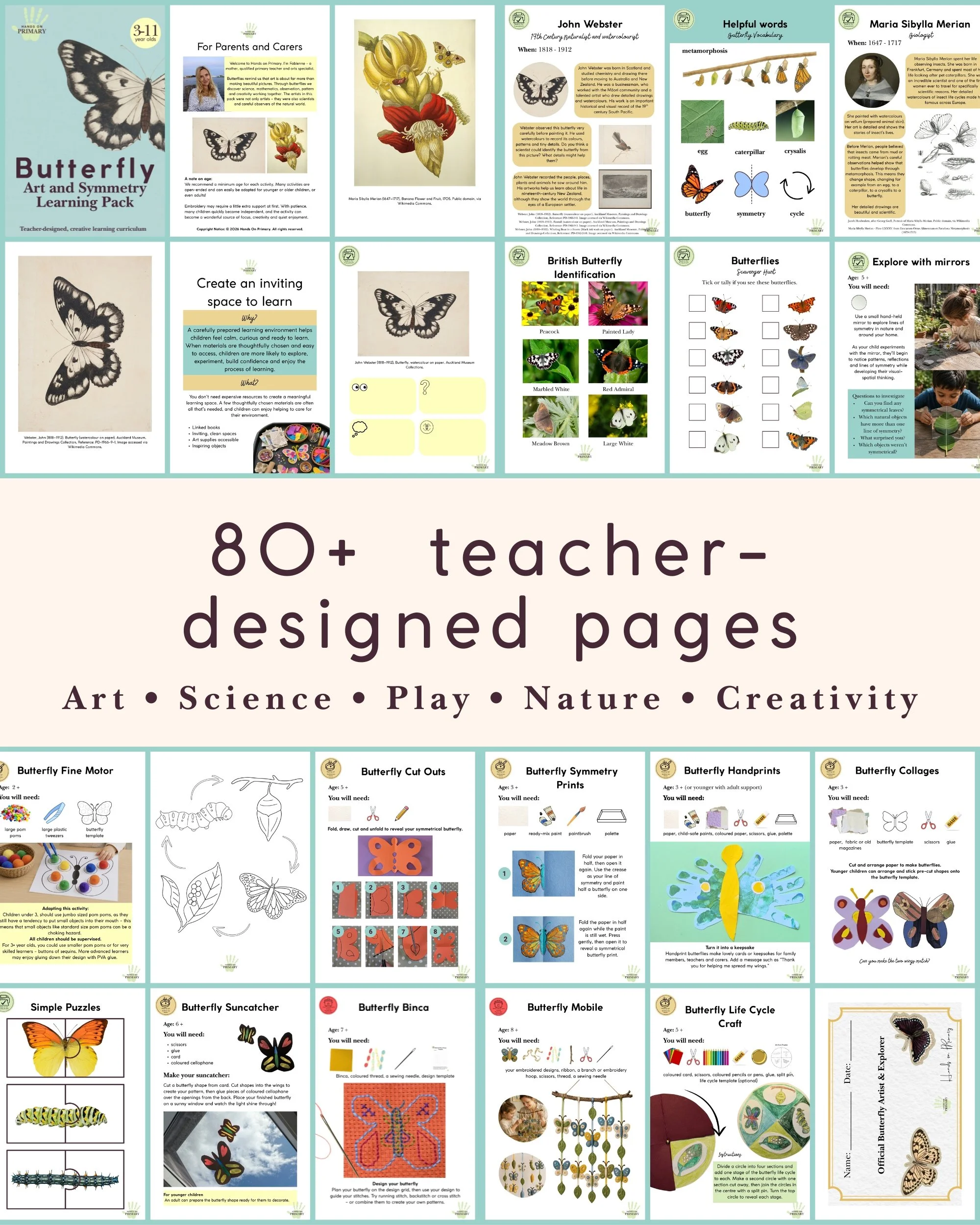
And if you would like to take your butterfly learning further, you can explore our Butterfly Art & Symmetry Learning Pack, which brings together art, science, nature, symmetry, drawing, embroidery and hands-on activities for children.
Because sometimes the best learning starts with a good book… and ends with muddy knees, paint-covered hands and a much closer look at the world outside.
Exploring the natural world with your children? You might also enjoy our guide to the best children’s books about plants, with picture books, stories and beautifully illustrated non-fiction to explore together.