Why Science and Art teaching work together. Case study: Vincent van Gogh’s Sunflowers.

Learning about Sunflowers together Hands on Primary
Every parent and primary school teacher knows something important: children naturally make connections.
In the Early Years Foundation Stage (EYFS), science-related learning is largely found within Understanding the World, while art sits within Expressive Arts and Design. On paper, these can appear to be separate areas of learning. One encourages children to explore the natural world, materials, people and places. The other invites them to create, experiment and express their ideas through art, design and imaginative play.
In reality, however, the boundaries are far less defined.
Artists and scientists share many of the same habits of mind. Both begin with curiosity. Both ask questions, observe closely, test ideas and learn through first-hand experience. A scientist seeks to understand how the world works; an artist explores the same world through creative expression. Both rely on careful observation of materials, patterns, colour, texture and change.
Perhaps most importantly, both give children a language for understanding the world around them. The more opportunities children have to explore through both scientific enquiry and artistic creation, the richer those connections become.
Vincent van Gogh's Sunflowers provides a wonderful example. Behind the bold brushstrokes and vibrant colours lies careful observation, curiosity and an appreciation of the natural world - qualities that sit at the heart of both science and art.
Looking and observing

Science and Art Activities based around observing sunflowers.
Both scientists and artists look at the world carefully and make observations.
Looking Like a Scientist
Scientists don't just collect facts.
They ask questions.
Why are the petals arranged like that?
Why do some flowers droop?
What happens after the flower dies?
Why do bees visit sunflowers?
Children naturally ask these questions too.
Before they draw a sunflower, encourage them to spend time really looking at one. Touch the stem. Count the petals. Notice the seeds. Compare a young flower with an older one.
Observation is one of the most important scientific skills children develop.
Looking Like an Artist
Van Gogh didn't simply copy what he saw.
He studied sunflowers carefully before painting them.
He noticed:
different stages of growth
curling petals
heavy seed heads
subtle colour changes
thick textures
Instead of painting the "perfect" flower, he painted flowers full of character.
That careful observation is exactly what scientists do.
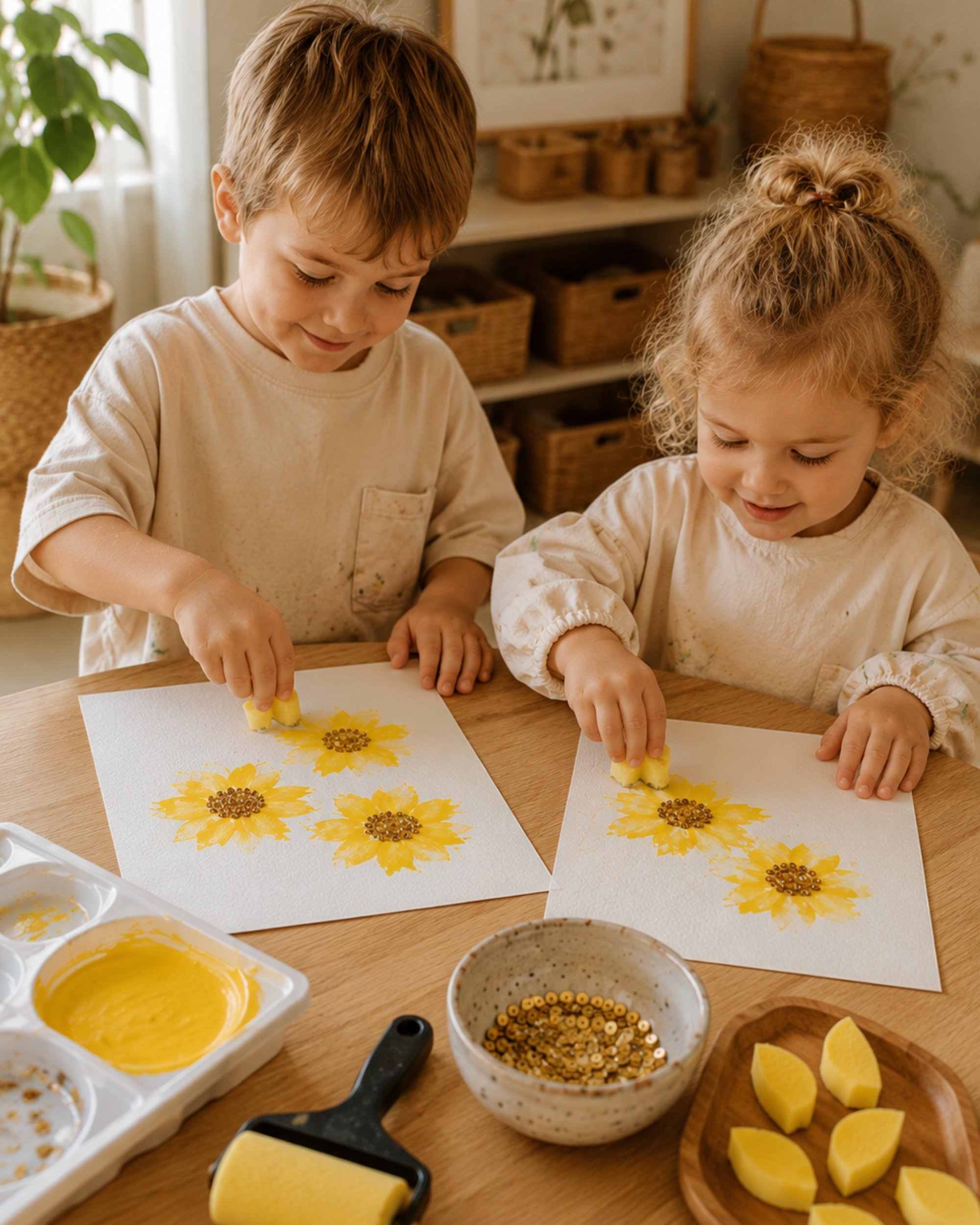
Older children often model to younger children how to complete activities.
Art Helps Children Notice More
Research suggests that drawing encourages children to slow down and notice details they may otherwise miss.
When children sketch a sunflower they begin asking questions naturally:
Do all flowers have petals that are the same shape?
Why are the seeds packed so tightly?
Why are some petals longer than others?
Art-making becomes another way of investigating the world.
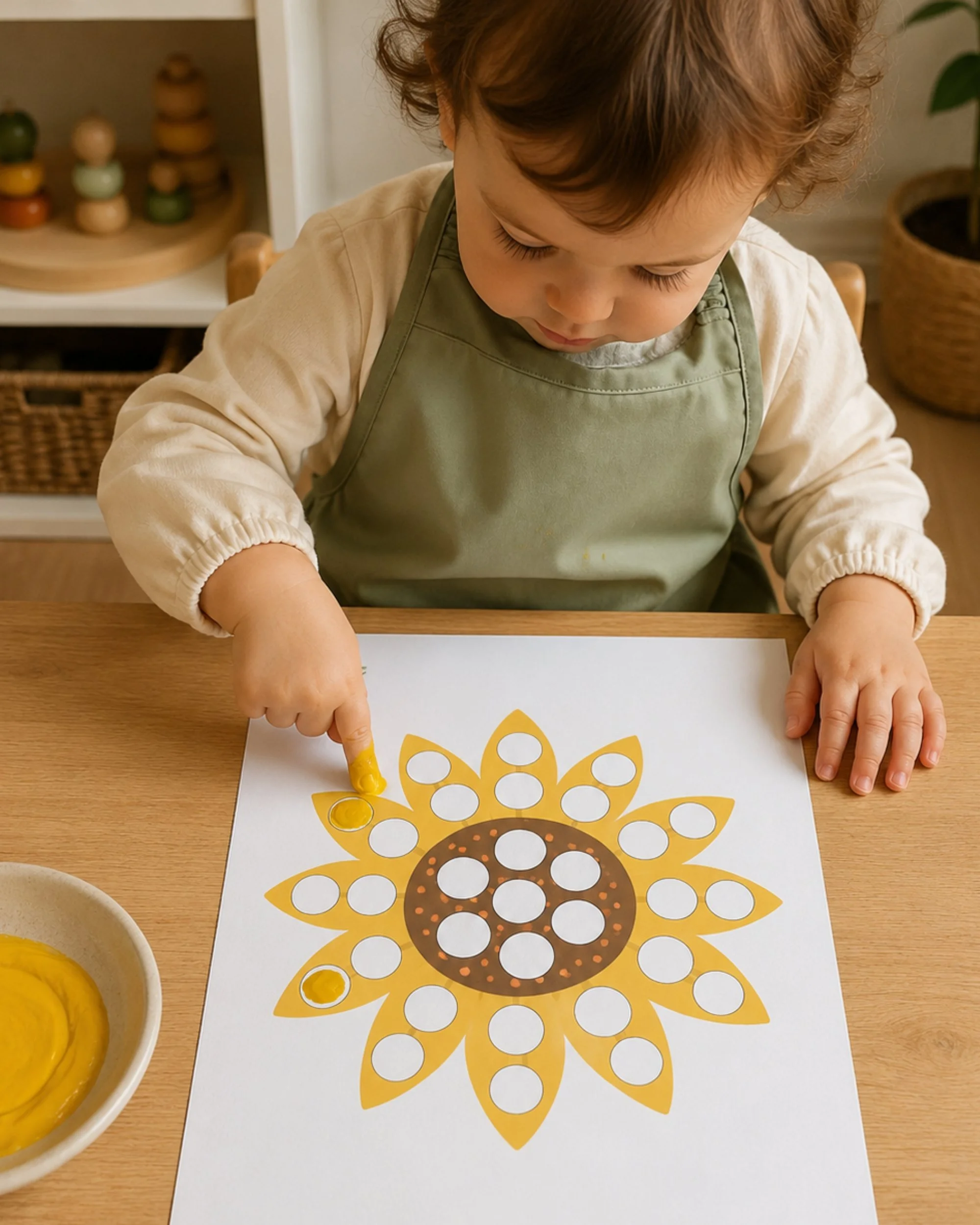
Our Art Packs have specific activities and templates aimed at younger learners (or those looking to practise their fine motor skills!)
From the Garden to the Painting
A rich learning experience might include:
Observe a real sunflower.
Learn about its life cycle.
Dissect the flower carefully.
Sketch different parts.
Explore Van Gogh's paintings.
Create your own sunflower artwork.
Without realising it, children are practising scientific observation, artistic techniques, vocabulary and careful thinking all at once.
Learning Doesn't Need to Stay in One Subject
Real life isn't divided into science lessons and art lessons.
When children paint butterflies, they learn about symmetry.
When they sculpt insects, they notice anatomy.
When they draw flowers, they explore plant biology.
The richest learning often happens when subjects connect.
Try It at Home
Next time you find a sunflower, resist the urge to take a quick photograph.
Spend five minutes looking together.
Ask:
What do you notice first?
What surprises you?
What has changed since yesterday?
Which part would be hardest to draw?
You might discover you're thinking like both an artist and a scientist.
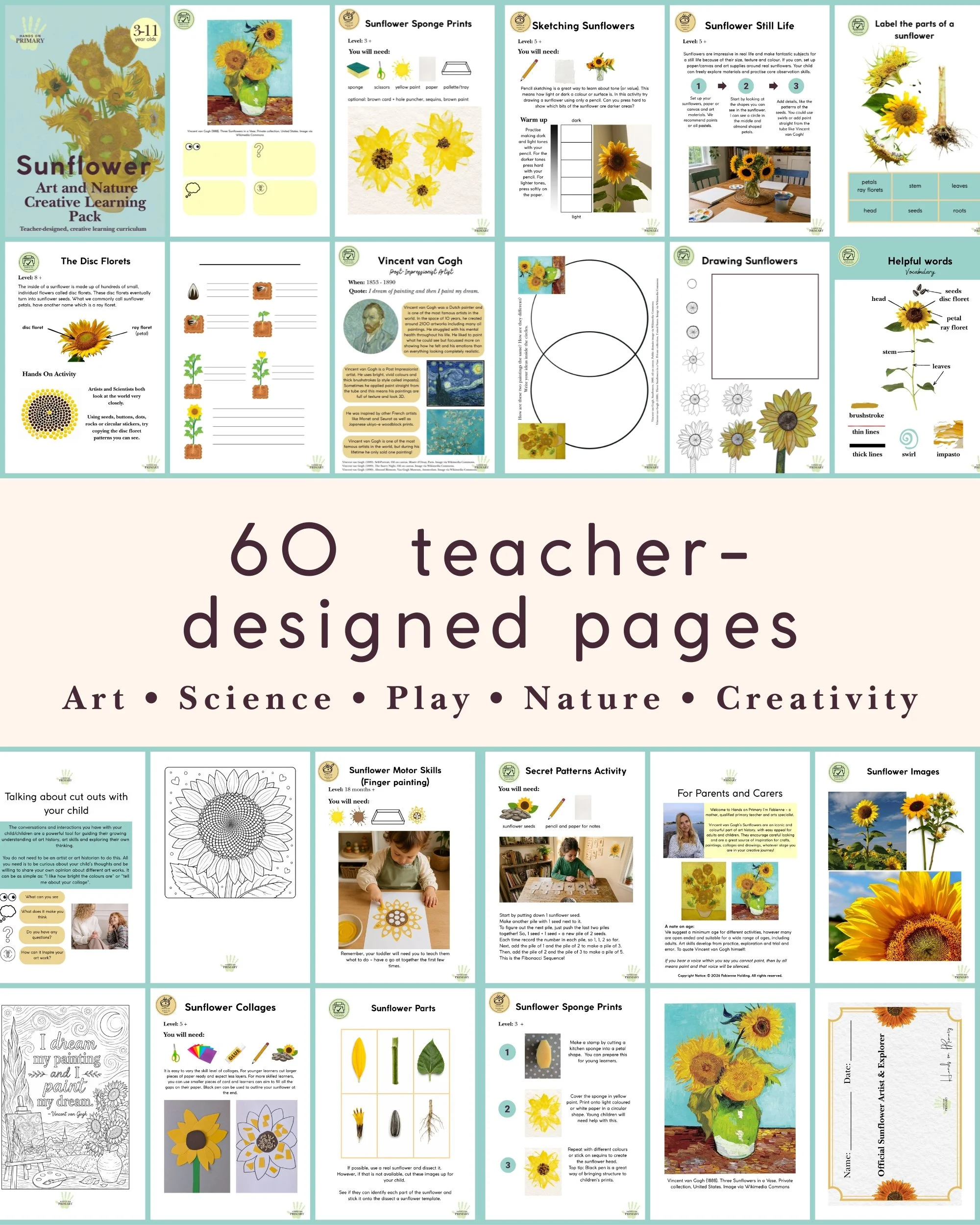
A preview of pages from our Sunflower Art and Nature Learning Pack | Hands On Primary
If you'd like to explore sunflowers through art, science, nature study and hands-on creative activities, our Sunflower Learning Pack brings these ideas together with printable activities designed for children aged approximately 3–11.