

Winter Art Activities for Kids: Exploring Colour, Nature and the Changing Seasons
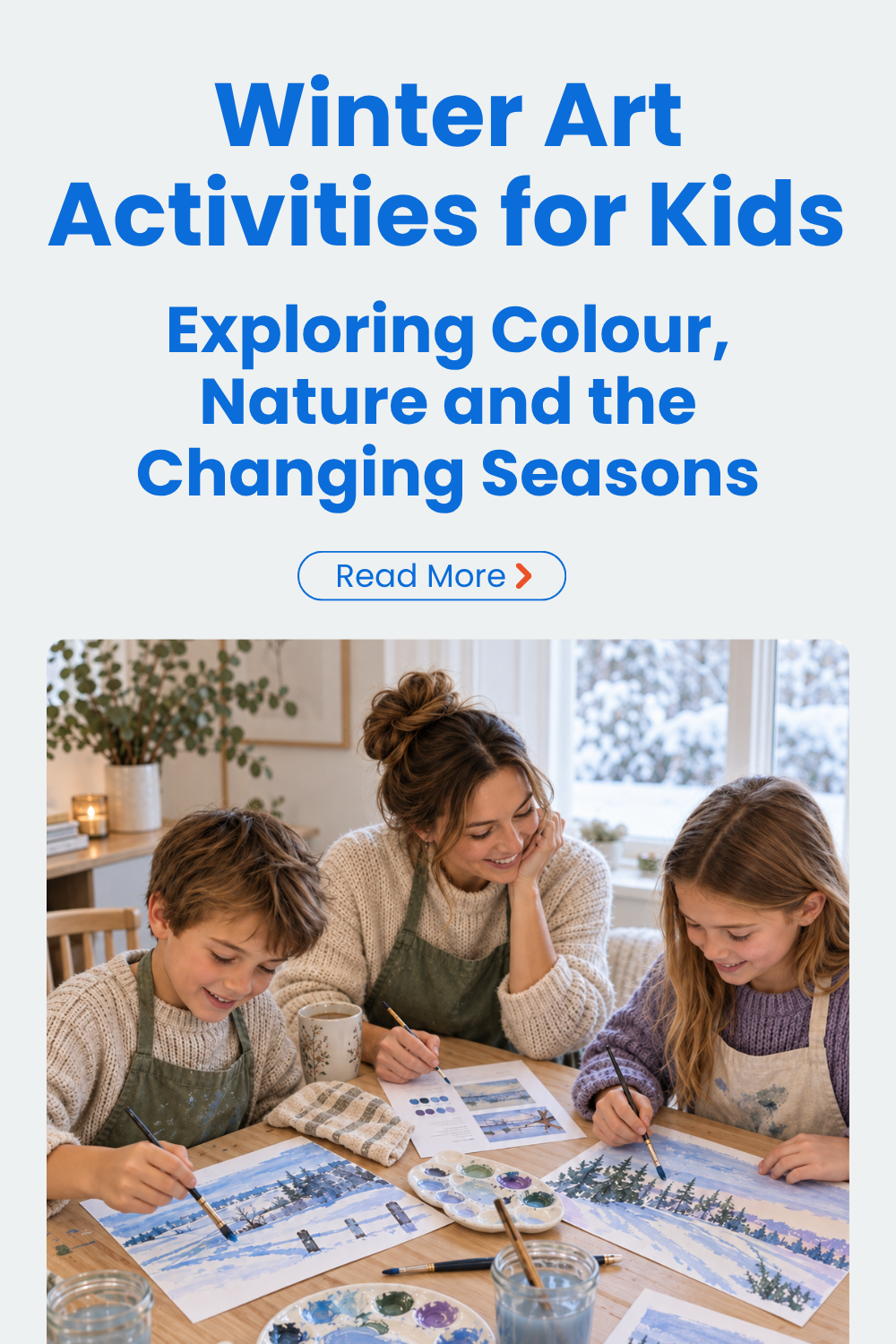
Children’s winter art is often dominated by Christmas trees, snowmen and sparkling decorations. These activities can be joyful, but the season itself offers so much more for children to notice and explore.
Look closely and winter is not colourless at all. It holds blue-grey skies, violet shadows, dark evergreen leaves, warm bare branches and pale morning light. On frosty or snowy days, even white reveals itself to be full of subtle shades and reflections.
Exploring these colours through art can help children slow down, observe the natural world and discover beauty in a season that is sometimes easy to overlook.
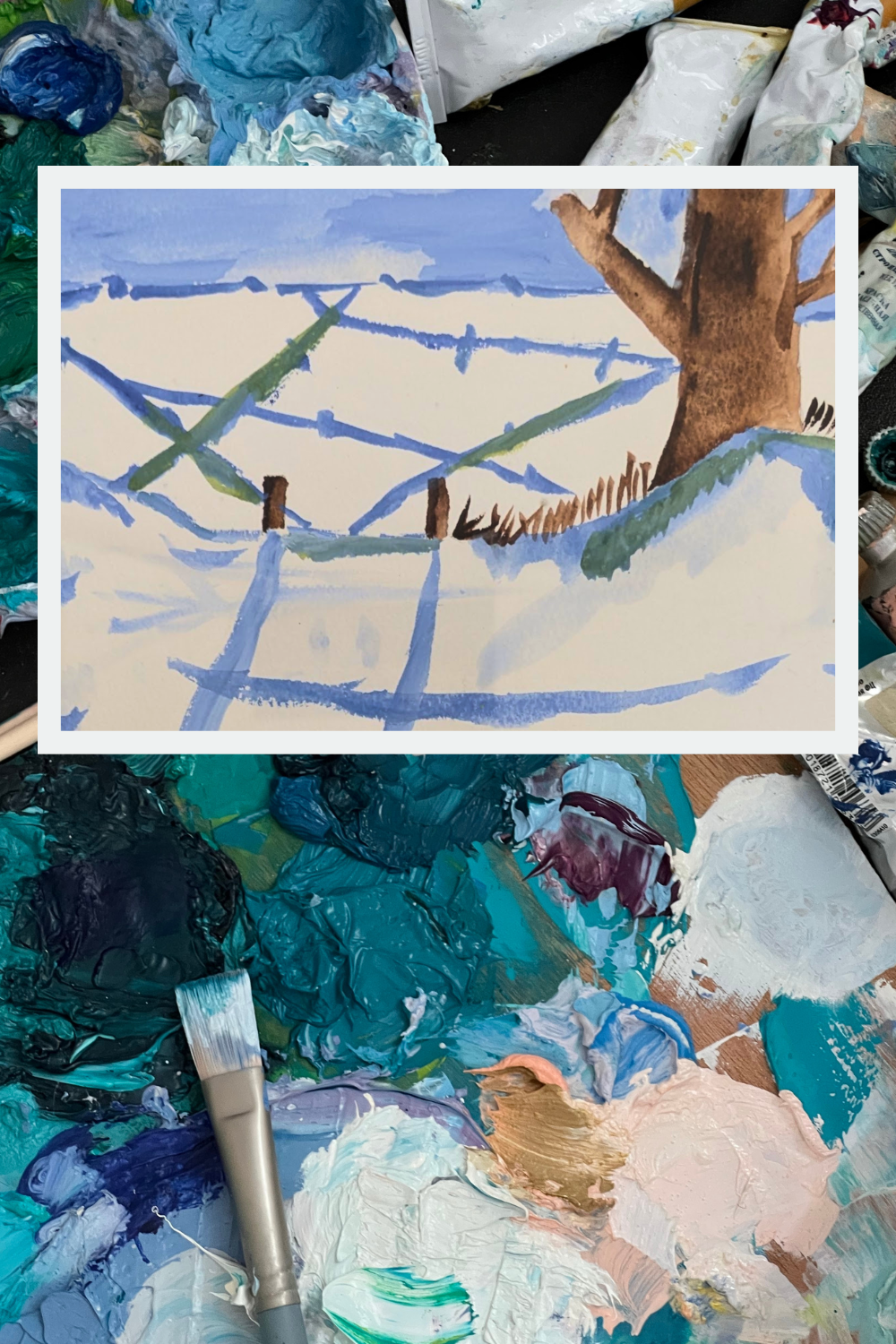
An example of a child’s winter painting above a winter palette.
Looking beyond Christmas crafts
Celebration crafts have an important place in children’s creative lives. Winter brings meaningful festivals and traditions across many religions and cultures, each offering opportunities to explore stories, symbols, materials and making.
However, seasonal art does not always need to be connected to a particular celebration.
Exploring weather, light, landscape and natural change gives every child an accessible way into winter, whatever their family celebrates. These activities can also be enjoyed throughout the season—not only during the weeks surrounding a holiday.
A winter landscape might begin with a frosty morning, a bare tree seen from the window or a surprising patch of colour spotted on a walk. Children can investigate the season as it really appears around them while also discovering how artists have represented winter in different places and at different times.
Is winter really colourless?
Ask a child to imagine a winter picture and they may initially choose white, grey or blue. These colours are certainly part of winter, but closer observation often reveals a much broader palette.
Depending on where you live, you might notice:
The dark green of ivy, pine or holly
Reddish-brown leaves beneath a hedge
Ochre grasses and seed heads
Purple-grey clouds
Pink or golden winter light
Blue shadows on snow
Moss, berries, bark and exposed earth
Bright artificial colours against a muted landscape
Even grey can change from warm to cool, pale to dark, silvery to almost blue.
This makes winter a wonderful season for learning about colour. Rather than telling children what a winter palette should look like, invite them to find their own.
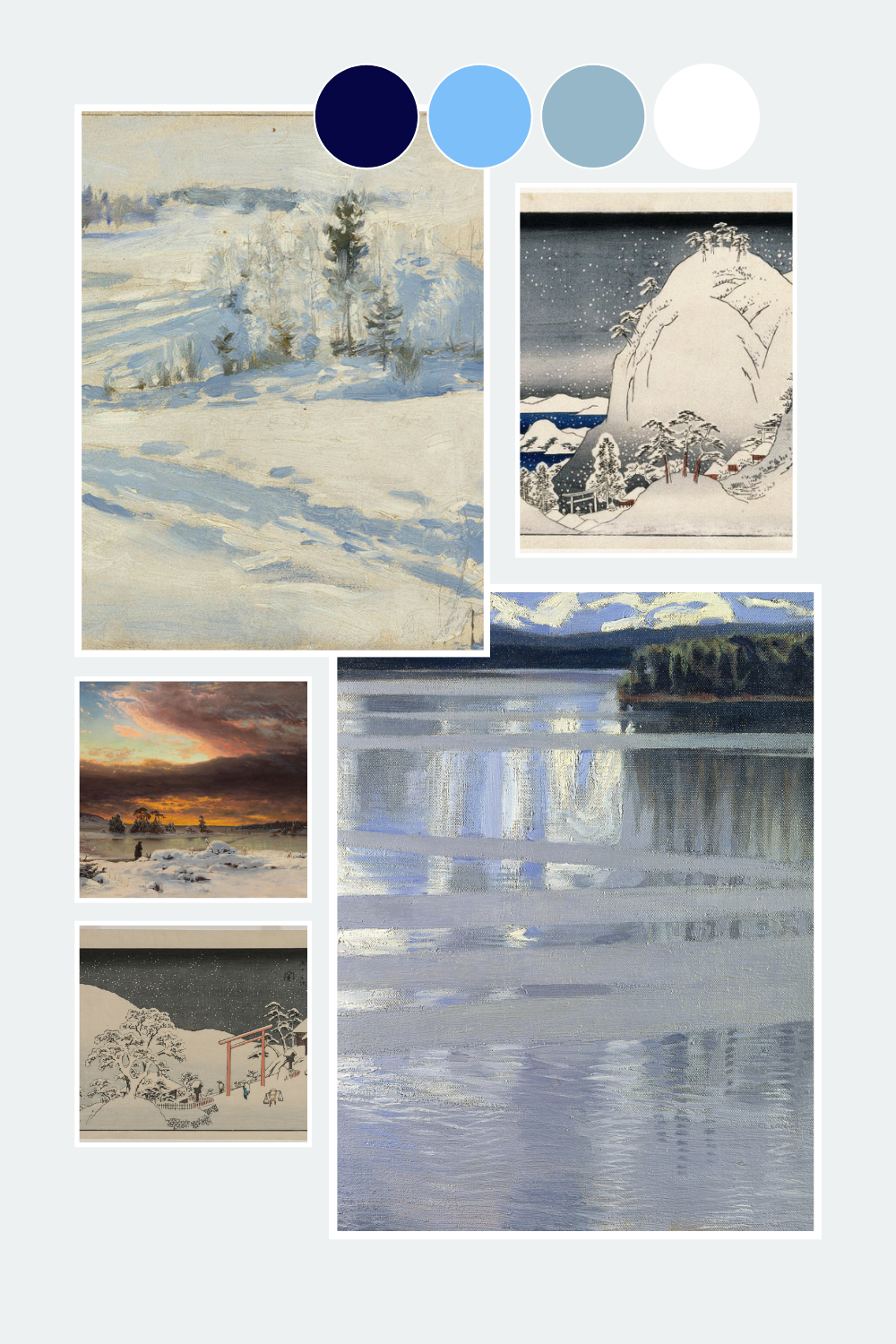
What colours can you see in winter? These winter artworks are by artists featured in our Winter Colours pack.
Begin with a winter colour walk
Before starting an art activity, go outside and look.
A winter colour walk can happen in a garden, park, woodland, local street or school playground. You do not need snow or dramatic scenery. The aim is simply to notice what is there.
Encourage children to look upwards at the sky and downwards at the ground. They can compare the colours of different tree trunks, examine the edges of fallen leaves or notice how light changes the appearance of familiar buildings.
Try asking:
Which colour can you see the most?
Can you find a warm colour in the winter landscape?
How many different greens or browns can you spot?
Do the shadows look grey, blue or purple?
What is the brightest colour you can find?
How does the sky change as you look towards the horizon?
Children could record their discoveries by taking photographs, making small colour sketches or collecting fallen natural materials where it is safe and appropriate to do so.
Back indoors, use these observations to mix paints or choose pencils, crayons, papers and pastels. The resulting palette will feel connected to a real place and moment rather than to a ready-made idea of what winter is supposed to look like.
Exploring warm and cool colours
Winter art provides a natural opportunity to explore warm and cool colours.
Blues, greens and purples are often described as cool colours, while reds, oranges and yellows are described as warm. However, children may begin to notice that colour is more complicated than these two groups suggest. Some blues appear warmer than others, and brown, grey or white can contain both warm and cool undertones.
Try placing different colours beside one another and discussing how they feel. A pale blue may appear colder beside orange, while a dark blue placed beside violet may create an entirely different atmosphere.
Children can then use these discoveries to create a winter landscape. They might choose a limited cool palette, introduce one contrasting warm colour or experiment with mixing their own winter neutrals.
This develops more than technical knowledge. Colour choices help artists communicate mood, temperature, time of day and atmosphere.
What can artists teach us about winter?
Artists can help children see familiar landscapes differently.
When looking at winter art together, begin with observation rather than a list of facts. Give children time to look closely and form their own ideas.
You might ask:
What did you notice first?
Which colours has the artist used?
Where can you see warm and cool colours?
How has the artist created a feeling of coldness?
Does this place seem quiet, windy, bright or gloomy?
Where do you think the light is coming from?
What might you hear if you stepped inside this scene?
Which artistic idea would you like to experiment with?
Finnish artists such as Akseli Gallen-Kallela and Fanny Churberg offer rich examples of northern landscapes, forests and changing weather. David Hockney’s seasonal landscapes can open conversations about repeated observation and the transformation of one place over time. Japanese woodblock prints by artists such as Utagawa Hiroshige can also introduce children to striking compositions and different ways of representing snow, weather and journeys through a landscape.
A study of an artwork does not need to end with children copying it. Instead, they might borrow one idea: a limited palette, a particular viewpoint, a way of arranging trees or a method of creating texture.
Knowledge can support creativity by giving children more possibilities to draw upon.
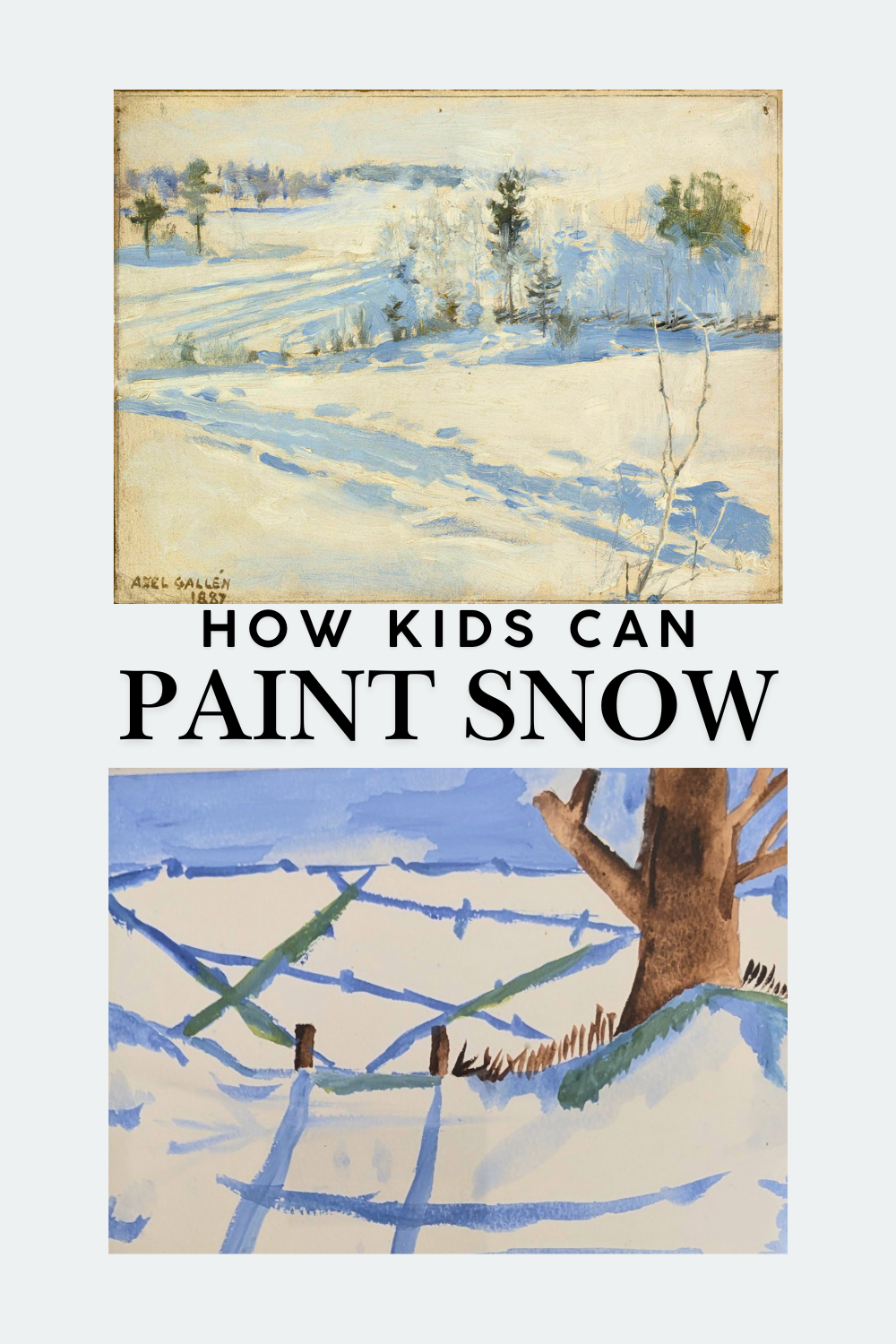
A child’s painting of snow.
Simple winter art activities for children
Create a winter landscape painting
Begin with a real winter view, a photograph or an inspiring artwork. Children can choose a small palette and mix variations of each colour before painting.
Encourage them to think about the background, middle ground and foreground. They might also consider which details are important and which can be simplified.
Make a winter colour collection
Create a page of painted or collaged colour samples inspired by a winter walk. Children can name their colours imaginatively, with descriptions such as frosty pavement, evening cloud, wet bark or winter sunlight.
Sketch bare winter trees
Without leaves, the branching structure of a tree becomes much easier to see. Look at the way the trunk divides into large branches and then into smaller twigs.
Children can sketch from life or use their own photographs. Biro, pencil, charcoal and fine drawing pens each produce a different quality of line.
Remind children that real trees are irregular. Branches do not need to be perfectly balanced or evenly spaced.
Experiment with wax resist
Draw snowflakes, icy marks or winter patterns using a white wax crayon or oil pastel. Paint over the drawing with diluted watercolour or watery paint and watch the wax resist the colour.
Children can experiment with pressing firmly or lightly, layering different wax colours and changing the strength of the paint.
Paint winter light
Winter skies can change rapidly, particularly early and late in the day. Look at a winter sunrise or sunset and notice where warm colours meet cooler ones.
Children could blend a simple sky and add a dark silhouette of trees, rooftops or a landscape in front.
Compare one place across the seasons
Choose a tree, garden, view or local landmark and return to it at different points during the year. Photograph, draw or paint it each time.
This encourages sustained observation and helps children recognise that seasonal change is gradual, not an instant switch from one type of weather to another.
Seasonal art without identical outcomes
Seasonal crafts can sometimes become very focused on producing a particular finished object. An adult prepares the pieces, children follow the steps and every result looks almost the same.
There is nothing wrong with occasionally enjoying a simple guided craft. Clear instructions can help children learn how tools and materials work. However, it is also valuable to leave space for individual decisions.
You might provide:
A technique without prescribing the final image
A limited selection of materials
An artist or artwork to investigate
A colour challenge
A shared starting point with several possible outcomes
Questions that encourage looking and thinking
This balance of knowledge, structure and freedom helps children develop confidence. They are supported, but they are still making art that belongs to them.
Making time to notice the season
Winter can feel long, dark and hurried. Art offers a reason to pause.
A few collected colours, a sketch of a bare tree or a conversation about a painting may seem simple, but these experiences teach children that ordinary surroundings are worth observing. They also show that creativity does not always require a complicated project or a cupboard full of specialist materials.
Sometimes it begins by looking carefully at the sky.
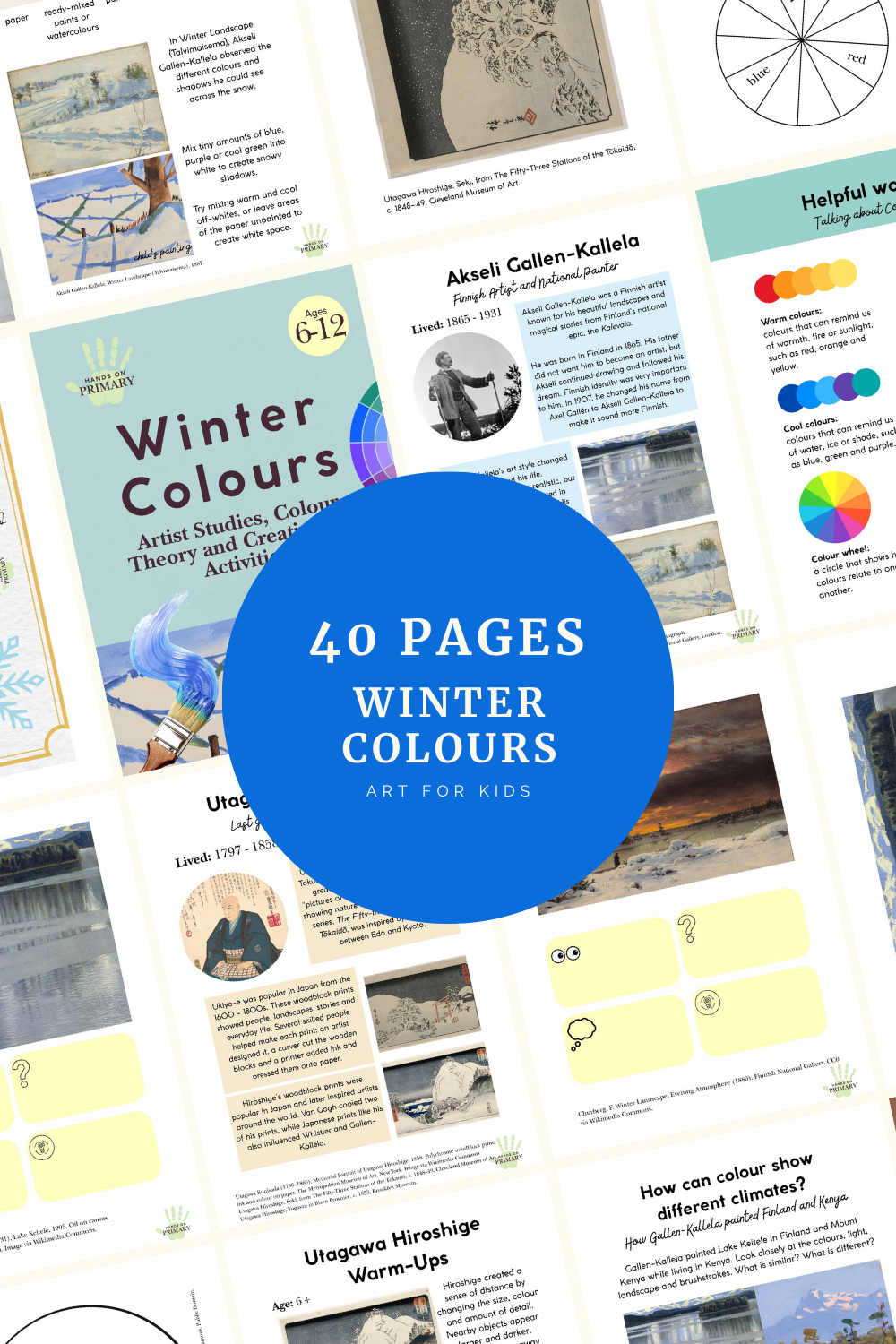
Explore the Winter Colours series
The Hands On Primary Winter Colours series brings together artist studies, colour exploration and practical art activities inspired by winter landscapes and the natural world.
Designed for children aged approximately 6–12, the activities offer enough guidance to help families begin confidently while leaving space for children’s own observations, ideas and artistic choices.
Explore the Winter Colours printable activities
No art background is needed - just a willingness to look closely, experiment and discover how much colour winter really holds.